


We (and so many others) have been talking about the disgusting attack ad from Vivek Ramaswamy about his fellow Ohio governor candidate Amy Acton.
If you missed the story, Vivek’s team put out an ad with Amy’s birth mother calling her a liar. The problem is, Amy hasn’t talked to her mom since she was 12 years old. The woman ran off with Amy’s stepfather, the man who sexually abused Amy for years, and remained married to her daughter’s abuser until the day he died.
Not exactly a reliable source on Amy’s character. Instead, the ad became a reliable source on Vivek’s character. Red Wine & Blue started a petition to demand that Ohio Republicans denounce the spot, which you can sign here.
And look, political ads have been horrible forever. It’s part of what turns people off of politics.
But this year, we have to question what we’re seeing more than ever. Not just because of videos like Ramaswamy’s, with childhood trauma repackaged as an attack ad with none of the crucial backstory. In many cases, we can’t trust what we’re seeing on screen because it literally never happened.
According to the Wesleyan Media Project, more than 220 AI-generated political ads (over $137 million dollars worth) have been released this midterm cycle. Researchers say the real number is likely much higher than 220, but it’s often hard to tell what’s real and what’s not. That’s kind of the whole problem.
More than 80% of the ads are for Republicans, and most contain no disclosure that they included AI. Some are little tweaks, like removing the background of a photo. But many are full-on deepfakes of politicians saying or doing things that never happened.
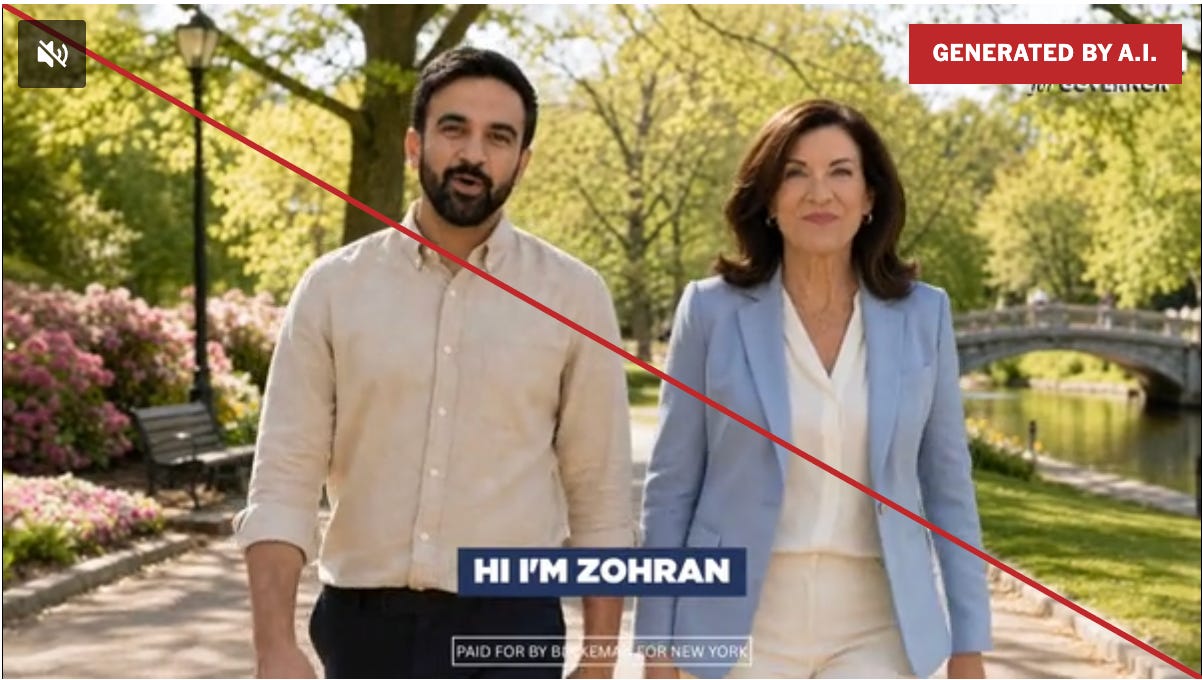
Take these for example. The above ad shows Zohran Mamdani and Kathy Hochul (the current governor of New York) strolling through a park, laughing about how they’re making New York unaffordable. Obviously, this never happened! The ad is a deepfake produced by Gov. Hochul’s opponent, Republican Bruce Blakeman. (Apparently Bruce has been using so much AI, Hochul’s campaign has nicknamed him “Bruce Fakeman.”)
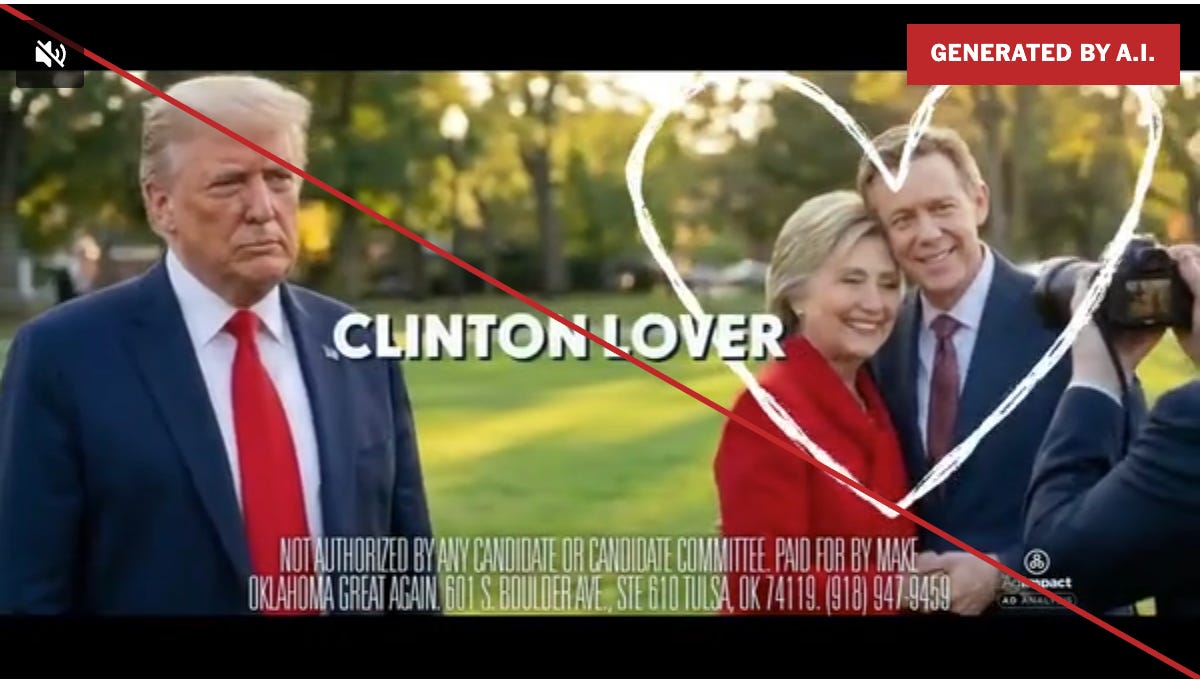
This second ad shows Republican Mike Mazzei cozying up to Hillary Clinton, something he clearly never did. The ad ran during the gubernatorial primary in May and was paid for by Make Oklahoma Great Again, which supports candidates who are even more conservative than Mike Mazzei.
A patchwork of laws protects voters in some states from AI political ads. 31 states have laws requiring that AI use is disclosed within 60 or 90 days of an election, but enforcement is spotty. And on the national level, there’s no law at all against deepfakes in election ads. Several representatives have tried, like Congresswoman Yvette D. Clarke (NY-09) with a bill called The REAL Political Ads Act, but it won’t be passed before November 3rd.
That means that more than ever, we can’t believe what we see in political ads. What we can trust is our conversations with the real people in our lives. So if a friend asks you if something they saw in an ad is true, make sure they know that many campaigns (mostly Republican) are using deepfakes, and pivot to the real values you know you share.
We have 12 days. Let’s make those conversations count.