


There’s been a lot happening with the Supreme Court lately, from birthright citizenship to striking down Colorado’s conversion therapy ban, but we can’t let this case go unnoticed.
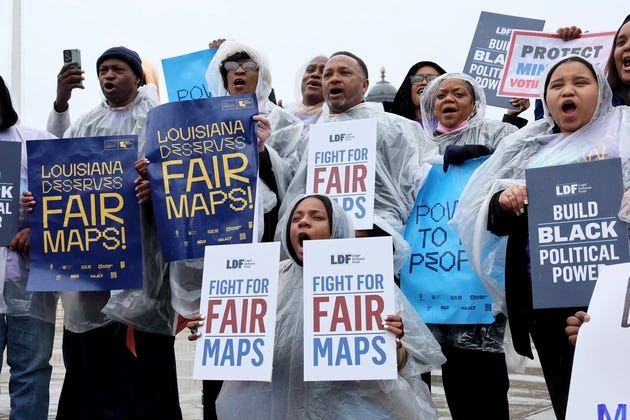
The Supreme Court’s upcoming ruling in Louisiana v. Callais could seriously weaken or end Section 2 of the Voting Rights Act. It would remove one of the last protections against extreme gerrymandering, creating a system in which politicians pick their voters rather than voters choosing their representatives.
And the Supreme Court’s decision would affect the whole country, not just Louisiana.
If the Court limits or weakens Section 2, states could redraw maps in ways that dilute the voting power of people of color, making it harder for them to elect candidates who represent their communities and more difficult to challenge unfair or gerrymandered districts in court.
What makes this case especially important is its timing.
If the Court’s ruling comes early this spring, some states could redraw congressional maps before the 2026 midterms.
If the decision comes in June, most maps will likely already be set.
That timing could determine whether voters have fair representation and full access to the ballot box in the 2026 midterm elections, or whether their voices will be diluted through gerrymandering.
If you want to learn more about the impact of this case, join us on Tuesday, April 7, to hear from Janai Nelson of the NAACP Legal Defense and Educational Fund, who argued this case before the Court.
Janai will break down what the case is about, why it matters so deeply for voting rights, and how it could reshape the protections established under the Voting Rights Act of 1965.
See you there!